
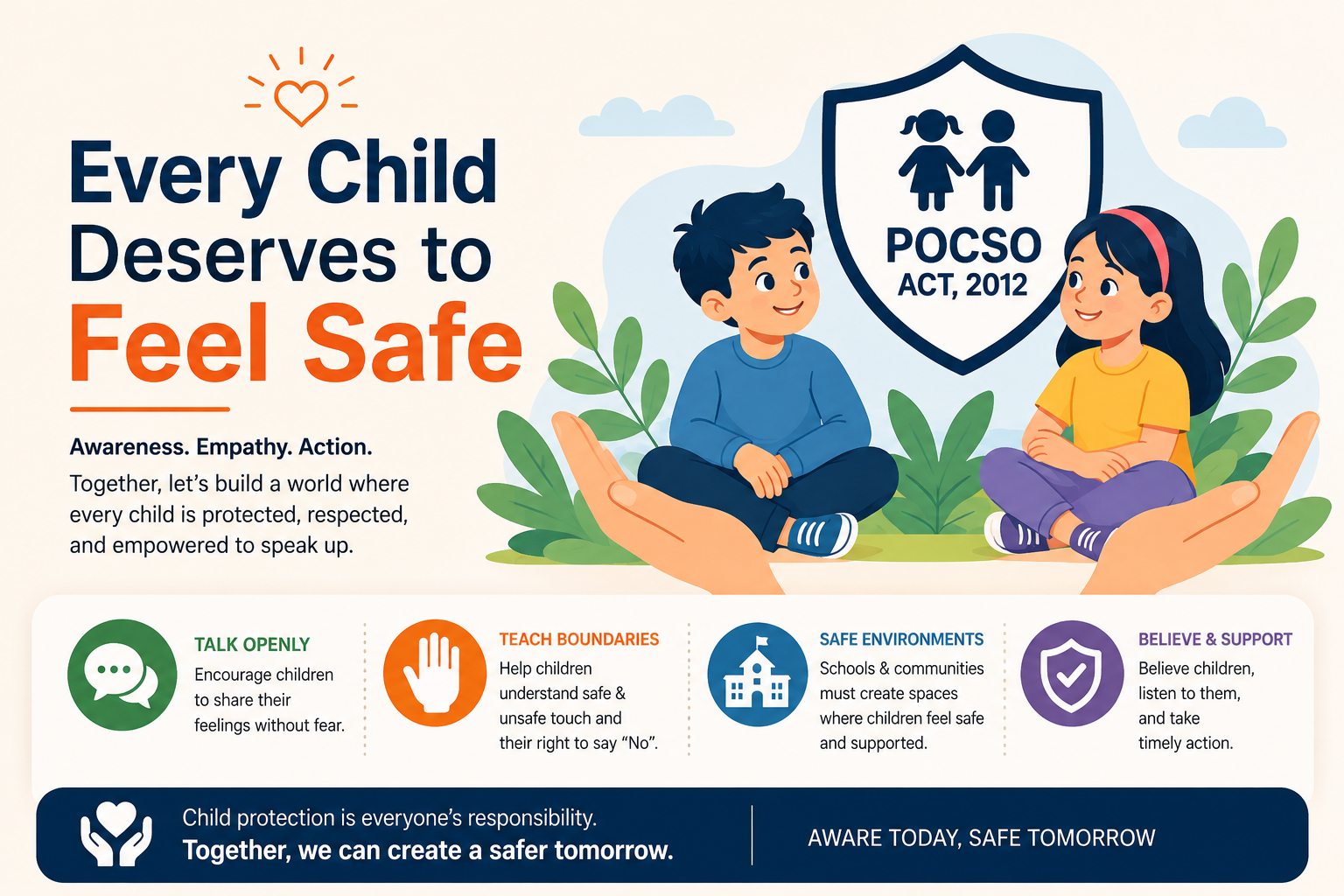
POCSO Act – Every Child Deserves to Feel Safe
Fear is not always visible. Sometimes it hides behind a child’s silence, sudden behavioral changes, or an unexplained reluctance to be around someone they once trusted. Children often struggle to express abuse, especially when the person responsible is someone familiar.
As a POCSO trainer, I have learned that safeguarding children begins long before an incident is reported. It starts with awareness, education, and creating environments where children feel safe enough to speak without fear of judgment.
The Reality We Must Acknowledge
Many people believe child sexual abuse is committed by strangers. In reality, the offender is often someone the child knows—a relative, neighbour, teacher, coach, or another trusted individual. Through manipulation and grooming, offenders exploit a child’s trust, making it difficult for them to disclose the abuse.
This is why parents, teachers, and caregivers must teach children about personal boundaries, safe and unsafe touch, and their right to say “No.”
Understanding the POCSO Act
The Protection of Children from Sexual Offences (POCSO) Act, 2012 was enacted to protect every child below the age of 18 from sexual offences. The Act provides child-friendly legal procedures and recognises that children require special protection during reporting, investigation, and trial.
However, the law becomes effective only when adults understand their role in recognising abuse and responding responsibly.
The Role of Parents, Schools, and Society
Protecting children is a shared responsibility.
Parents should start open conversations, teach children about body safety, and assure them that they will always be heard, believed, and supported. Schools must conduct regular POCSO awareness programs, train staff, and establish strong child protection policies. Communities should remain alert to warning signs and never ignore a child’s distress.
Every caring adult can become a child’s first line of protection.
Awareness Saves Lives
Child protection is not about creating fear—it is about creating confidence. One conversation, one attentive adult, or one decision to believe a child can prevent lifelong trauma.
The POCSO Act provides the legal framework, but awareness, empathy, and timely action are what truly protect children.
Let us work together to build homes, schools, and communities where every child feels safe, respected, and empowered to speak up.
Above all, safeguarding children is not just a legal responsibility—it is a moral responsibility that we all share.