
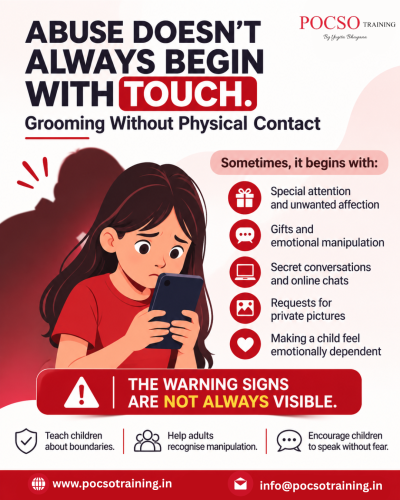
Grooming Explained
When talking about sexual abuse against children, physical contact is often the first thing that springs to mind. However, grooming – the process by which an offender wins a child’s trust with a view to manipulating, exploiting or sexually abusing them – can start much earlier. Grooming does not always involve physical contact.
Grooming: What is it?
An abuser could use gifts, emotional support, special attention or excessive affection to build a child’s confidence. They may slowly start inappropriate conversations, ask for private photos, pressure to keep secrets or become emotionally dependent.
As digital access becomes more widespread, grooming can also occur on social media, online gaming platforms, messaging apps and other digital spaces. What may start out as a friendly exchange can slowly turn into manipulation.
Warning Signs Adults Should Know About
Parents, teachers and caregivers should look for sudden secrecy, unexplained gifts, odd online interactions, withdrawal from family members or discomfort around a particular person. These indicators are not necessarily indicative of grooming behavior, but should be taken seriously.
Recognizing the Role of POCSO
POCSO Act provides legal protection against sexual offenses against children. Depending on the conduct, the provisions on sexual harassment, sexual assault and sexual exploitation may apply. Furthermore, adults are required by law to report any suspected or known offenses under Section 19.
Prevention starts with awareness
Keeping children safe is about more than preventing physical harm. This also means being able to recognize psychological manipulation, foster open communication, and teach children that they can speak up without fear or shame.
POCSO Training helps parents, educators and professionals to identify warning signs, respond appropriately and create safer environments for all children .